Can We Really Do That?
I had two conversations last year that are still sitting with me. Two different families, with multiple kids, good incomes, and both stressed about money.
But for completely opposite reasons.
"The best way to deal with uncertainty without hiding in a bunker is to save like a pessimist and invest like an optimist."
That sounds straightforward until you actually try to do it. Because what I see over and over is that most people collapse into one side or the other. They're either saving everything and miserable today, or spending everything and fragile tomorrow.
Holding both at the same time? That's harder than it sounds.
The Family That Saved Too Well
The Drake family (not their real names) has three kids, ages 11, 13, and 15. Both parents work demanding jobs and are trying to do everything right.
And on paper, they were. Maxing out both 401(k)s, contributing to 529 plans for all three kids, and building their investment portfolio. Their retirement accounts looked great for people in their early 40s.
But when I asked about cash reserves, things got quiet.
They had maybe $3,000 in their checking account. Another $2,000 in savings. That was it.
In July, their HVAC died. It was 95 degrees. They had to replace it immediately. $8,000. They put it on a credit card because they didn't have the cash. They'd pay it off over a few months, but it stressed them out.
Two months later, their daughter needed braces. Another $4,000. Same thing. Credit card. More stress.
Every unexpected expense, and there's always an unexpected expense, sent them into crisis mode. They were constantly anxious. Fighting about money. The husband told me he felt like they were one car repair away from everything falling apart.
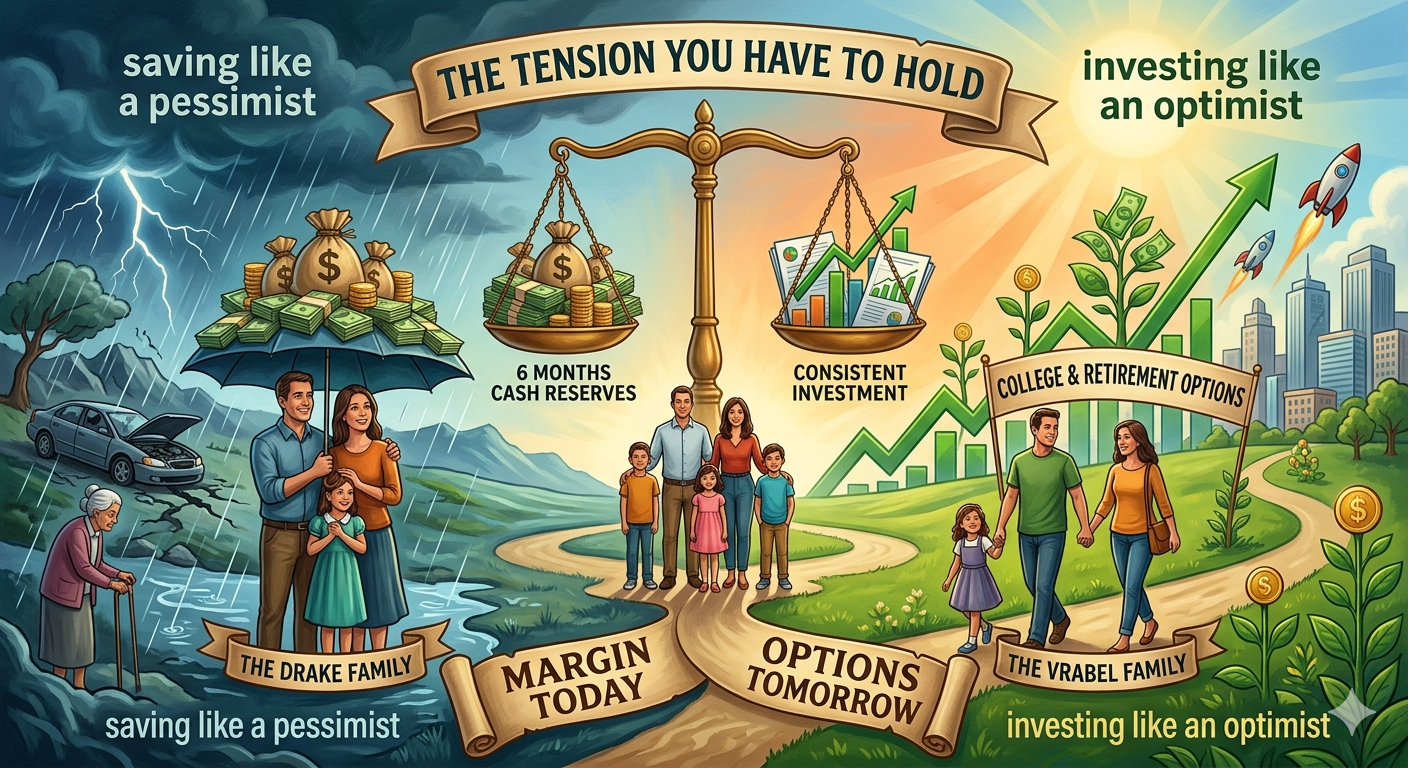
Here's what struck me. They were building wealth for 30 years from now while being completely fragile today. They were investing like optimists, trusting their portfolio would compound and they'd retire comfortably. But they weren't saving like pessimists. They had no margin for when life happened.
We sat down and looked at everything. I said, "What if you stopped contributing to your 401(k) for six months? Just paused it. Took that money and built up a cash reserve. Six months of expenses sitting there so when the next thing breaks, it's not a crisis."
The husband looked at me like I'd suggested something illegal. "Can we really do that?"
I told him yes. Our life and financial plans are never set in stone! Plans are always adjustable. And here's what doesn't make sense to me: you're doing all the hard work of delayed gratification. You're sacrificing today for tomorrow. But you've made yourselves so fragile that you can't even be present with your kids because you're always stressed about money.
They did it. Pulled back on retirement contributions and built the cash buffer over the next several months. The relief was immediate.
Not because their net worth changed. It actually went down slightly because they weren't getting the market returns on that cash. But they could breathe. They could handle normal life without panic. They could focus on their kids instead of constantly worrying about the next expense.
The Family That Spent Too Well
The Vrabel (not their real names) family is the complete opposite. Four kids, good income, living well right now. Nice house in a good school district. Family vacations every year. Kids in travel sports and music lessons. They're present, they're engaged, they're making memories.
But they're not saving anything.
They contribute enough to their 401(k)s to get the company match. Maybe 6% combined. That's it. No additional savings. No taxable investment accounts. No real cash reserves beyond a few thousand dollars.
Every dollar that comes in goes right back out. Not on wasteful stuff necessarily. Just life. The mortgage, the activities, the groceries for six people, the cars, the everything.
They came to me because their oldest just turned 13 and college is suddenly real. They have no idea how they'll pay for it. And behind that question was a bigger one. They want to step back from work someday. Maybe one of them goes part-time when the kids leave. Maybe they retire at 60 instead of 67. But the math doesn't work.
They're investing in today but not tomorrow. And now the stress is building because they can see what's coming and they're not ready for it.
Here's the thing. I get it. Both of these approaches make sense in isolation.
The Drakes were told their whole lives to max out retirement accounts. Live below your means. Delay gratification. Save for the future. And they took it seriously. Maybe too seriously.
The Vrabels saw their own parents sacrifice everything for someday, and then someday never came. Or it came, and they were too old or too tired to enjoy it. So they chose differently. Be present now. Make memories while the kids are young. Don't deprive yourself of life today for a theoretical tomorrow.
Both are responding to real things. Both have logic behind them. But both are missing the same piece.
The Tension You Have to Hold
You need to save like a pessimist AND invest like an optimist. Not one or the other. Both.
Saving like a pessimist means assuming things will go wrong because they will.
You'll lose a job. A parent will need care. The market will crash. The roof will leak. Your kid will break their arm. Something you can't even imagine right now will happen. And if you have no margin when it does, you're forced into bad decisions. You sell investments at the worst time. You go into debt. You panic.
So you need cash reserves. Potentially six months of expenses, maybe more if your income is variable or your job is uncertain. Just sitting there doing nothing except giving you the ability to handle normal life without crisis.
Investing like an optimist means trusting that, over time, things tend to work out.
The market grows. Your career progresses. Your kids become independent. Companies innovate. Productivity improves. Human ingenuity finds ways forward. You put money in the market consistently and let time do its work. You don't hide in cash, earning nothing. You participate in growth.
If you only save, you're hiding in a bunker. Inflation eats your purchasing power. You're protecting yourself from risk but also from opportunity. You end up with a pile of cash that's worth less every year while the market doubles over a decade.
If you only invest without saving, you're fragile. You're one unexpected expense away from disaster. And when disaster comes, and it always comes, you're forced to sell investments at exactly the wrong time or go into debt that takes years to dig out of.
You need both. And holding both at once is uncomfortable because they contradict each other.
The pessimist says protect yourself. Build margin. Assume the worst.
The optimist says trust the future. Take risk. Participate in growth.
Those feel like opposite instructions. And they are. But that tension is exactly where you need to live.
Why This Is So Hard
I think most people are wired one way or the other. Some people are programmed to save. Others are programmed to spend. Very few naturally do both.
The savers were raised to be careful. Don't take unnecessary risks. Live below your means. Prepare for disaster. And they take it so far that they make themselves miserable. They're optimizing for a future that might never come while being stressed and unable to be present today.
The spenders were raised differently. Life is short. Make memories. Don't deprive yourself. Enjoy what you've earned. And they take it so far that they build a life on a foundation that can't hold. One crisis and everything collapses.
Theresa and I have had versions of this conversation in our own house. I'm turning 50 this year. Our triplets turn 15 in December. We've got maybe three more years before they start leaving home.
And there's this constant tension. Do we save more for when they're gone, and we need to replace their college expenses with retirement savings? Or do we spend more now on experiences while they're still here? The answer is somehow both. But both feel impossible when there's no margin in the budget or the schedule.
What I've learned is that you can't collapse into one side. You have to hold the tension. You have to save enough that you have a margin when life happens. And you have to invest enough that your future self has options.
What This Actually Looks Like
So what does this mean in practice?
First, build cash reserves. Potentially six months of expenses. Maybe more if you're self-employed or your income varies. This money does nothing except sit there and give you the ability to breathe. Yes, you're giving up potential investment returns. That's the cost of not being fragile.
Second, invest consistently for the long term. Not after you have enough cash. Not someday when you have more margin. Now. Even if it's small. Even if it feels like it won't matter. Because compound interest needs time, and you can't get that time back later.
Third, adjust as life changes. When the Drakes built their cash reserves, they paused retirement contributions for a few months. That was the right call. They needed margin today more than they needed slightly higher returns decades from now.
When your cash reserves are solid, shift more toward investing. When life gets expensive or uncertain, shift back toward saving. The percentages change, but both are always there.
The Real Question
Here's what I'd suggest. Look at your actual situation this week. Not what you think you should be doing. Not what some article told you. What you're actually doing right now.
Do you have cash reserves? Real cash. Not "we could probably sell some stocks if we needed to." Not "we have a home equity line we could tap." Six months of expenses sitting in an account doing nothing except giving you the ability to handle life when it happens.
And are you investing for the future? Not just in your 401(k) to get the match. Actually putting meaningful money in the market consistently and letting it compound.
If you're doing one but not the other, you're fragile in some direction. Maybe fragile today, maybe fragile 20 years from now. But fragile.
The goal isn't perfection. It's having both pieces in place so you can actually live your life and be present without constant anxiety. You can make decisions from choice rather than desperation, and when the HVAC dies, the market crashes, or something unexpected happens, it's not a crisis. It's just life.
Money is a number. Enough is a story. And part of that story is having margin today and options tomorrow. Not one or the other. Both.